-min%20(1).svg)
Life changes. When you finalized your divorce, the spousal maintenance order made sense for your situation at the time. But now, whether due to job loss, remarriage, significant income shifts, or health issues, you're wondering if those payments can be adjusted.
Washington law recognizes that circumstances evolve, and the courts provide a clear process for modifying spousal maintenance when substantial changes occur. Our experienced Spokane spousal support attorneys help clients throughout Spokane County understand when modification is possible and how to successfully petition the court.
What Is Spousal Maintenance After Divorce?
Spousal maintenance (often called alimony in Washington state) involves regular financial payments from one ex-spouse to another following divorce. The court orders these payments to help the lower-earning spouse maintain a reasonable standard of living during the transition to financial independence.
Unlike some states with strict formulas, Washington judges have broad discretion in determining maintenance amounts and duration. The court considers factors including:
- Length of the marriage
- Each spouse's financial resources and earning capacity
- Standard of living established during marriage
- Age and physical condition of both parties
- Time needed for the recipient to gain education or training
Important note: Washington distinguishes between short-term and long-term marriages, with longer marriages typically resulting in more extended maintenance periods or even permanent support orders.
Legal Grounds for Modifying Alimony in Washington State
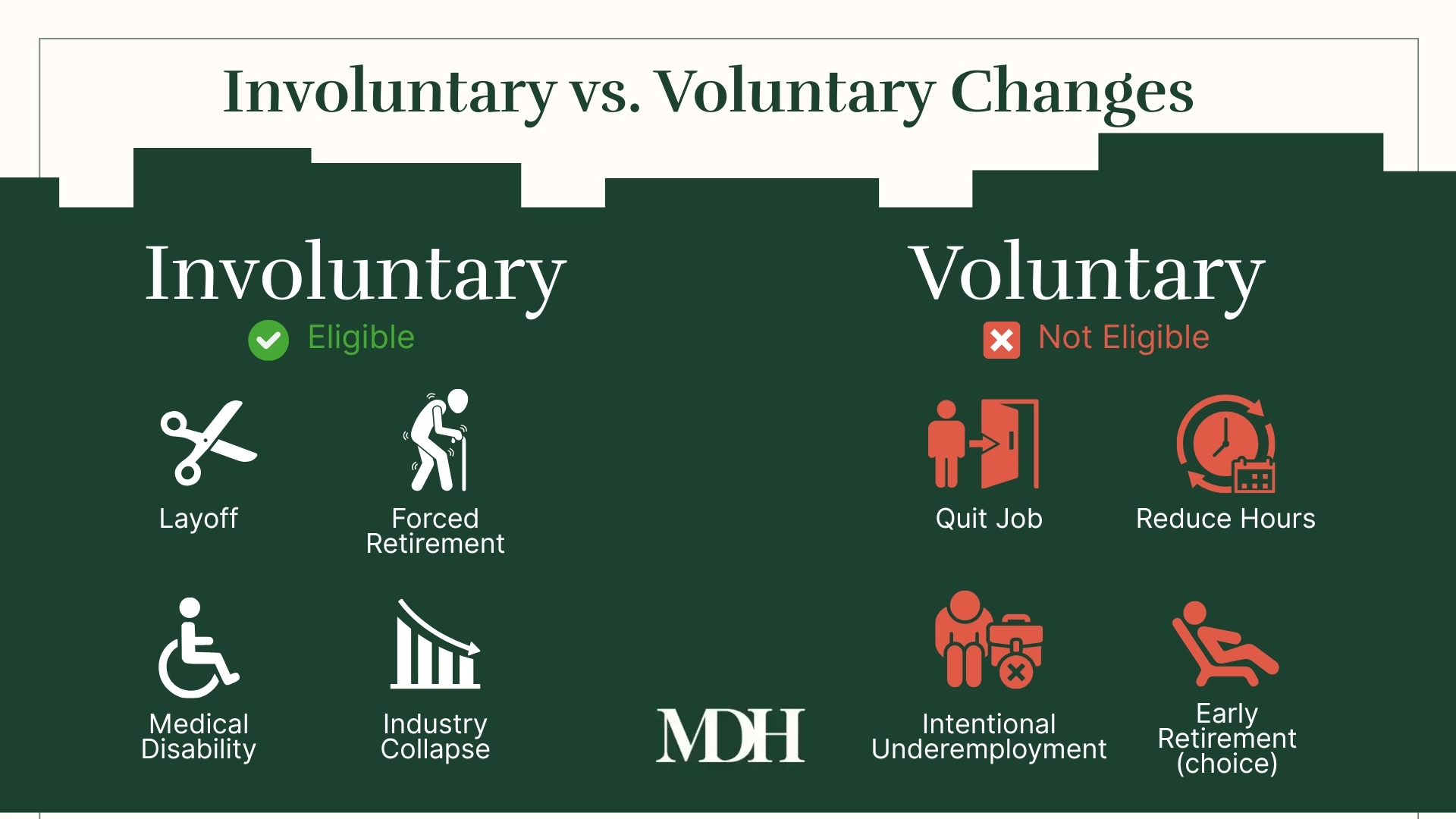
Washington law allows modification of spousal maintenance orders when circumstances substantially change. Under RCW 26.09.170, either party may petition for modification based on a "substantial change of circumstances".
Common qualifying changes include:
- Income changes: Job loss, significant pay increases or decreases, or involuntary reduction in work hours that substantially affect either party's financial situation.
- Health issues: Serious illness or disability affecting either party's ability to work or creating increased financial needs for medical care.
- Retirement: Reaching full retirement age or being forced into early retirement due to circumstances beyond your control.
- Cohabitation or remarriage: The recipient is entering a new committed relationship or marriage that provides financial support and reduces their need for maintenance.
Critical distinction: The change must be involuntary and unexpected. Voluntarily quitting a job or reducing work hours won't typically qualify.
When Can You Request a Modification?
Timing matters when seeking to modify spousal maintenance. Washington courts won't entertain modification requests for minor or temporary changes.
Immediate vs. Long-Term Changes
Some changes warrant immediate action:
- Sudden job termination through no fault of your own.
- Diagnosis of a serious medical condition.
- Discovery that your ex-spouse is cohabiting with a new partner.
Other situations require waiting to establish a pattern. For example, if you're seeking a reduction due to a decrease in income, the court will want to see that the decrease is permanent, not temporary.
Time Limits for Filing
While there's generally no strict deadline for requesting modification, you should act promptly when circumstances change. Modifications typically apply from the date you file your petition forward, not retroactively. Waiting months after a qualifying change could mean continuing payments you can't afford.
#cta_start
Get Help with Your Spousal Maintenance Modification
Our experienced Spokane spousal support attorneys understand Washington's modification laws and can help you build a strong case. Contact Hodgson Law Office today to schedule a 30-minute consultation for $300.
Schedule a 30-minute consultation for $300
#cta_end
Steps to Modify Your Spousal Support Order
The modification process requires careful preparation and adherence to court procedures. Here's how to approach it effectively.
1. Gather Supporting Documentation
Start by collecting evidence of the substantial change. Financial records like pay stubs, tax returns, and bank statements demonstrate current income and expenses. Medical documentation, such as doctors' notes or disability determinations, supports health-related claims. Employment records, such as termination letters or job search documentation, show involuntary job loss. If cohabitation is a factor, gather utility bills, lease agreements, or witness statements showing your ex-spouse lives with a partner.
2. File the Motion with the Court
You'll need to file a Motion to Modify Maintenance with the same court that issued your original divorce decree. The motion must include a statement of the substantial change in circumstances, financial declarations showing current income and expenses, your proposed modified maintenance amount and duration, and all supporting evidence and documentation. If you're struggling financially, you may also request a temporary modification while the court considers your petition.
3. Serve Notice to Your Ex-Spouse
Washington law requires proper notice to the other party. Your ex-spouse must receive a copy of the motion and all supporting documents, notice of the court hearing date, and opportunity to respond, typically within 20 to 30 days. This ensures both parties can present their case fairly.
4. Attend the Court Hearing

At the hearing, both parties present evidence and arguments. The judge will evaluate whether the change in circumstances is substantial, whether it was voluntary or involuntary, how it affects both parties' financial situations, and what a fair and reasonable modified amount would be. Come prepared with organized documents, witness testimony if applicable, and clear explanations of why modification is necessary.
Common Reasons Courts Approve Modifications
Washington courts regularly modify spousal maintenance under specific circumstances. Knowing what qualifies increases your chances of success.
Job Loss or Income Reduction
- Involuntary termination: Layoffs, company closures, or being fired for reasons beyond your control typically qualify.
- Industry downturns: If your entire field has contracted and you can't find comparable work despite good-faith efforts.
- Business failure: If you're self-employed and your business fails despite reasonable efforts.
The court will examine whether you're actively seeking new employment and whether any income reduction was within your control.
Retirement
Reaching retirement age presents substantial grounds for modification. The court recognizes that:
- Fixed retirement income is often significantly less than working income.
- Continuing full payments may be impossible on Social Security and retirement savings.
- Both parties typically anticipated retirement when the original order was made.
Note: Early voluntary retirement may be subject to more scrutiny than retirement at full retirement age.
Recipient's Changed Financial Status
If your ex-spouse's financial situation improves substantially, you may seek a reduction or termination. Common scenarios include:
- Career advancement: Significant promotions, salary increases, or a new, high-paying job.
- Inheritance or windfall: Receiving substantial assets that reduce their need for support.
- Cohabitation: Living with a romantic partner who contributes to household expenses reduces the recipient's financial need.
Health Issues
Serious illness or disability can justify a modification in either direction:
- If you're paying support and become disabled, you may request a reduction.
- If you're receiving support and face increased medical expenses, you may request an increase.
Medical documentation and expert testimony strengthen these cases.
What the Court Considers During Modification

Judges weigh multiple factors when evaluating modification requests. The court examines:
- Financial capacity of both parties: Current income from all sources, assets and liabilities, monthly living expenses, future earning potential, and investment or passive income streams.
- Original divorce agreement terms: Non-modifiable maintenance clauses, automatic modification triggers like retirement at a certain age, and duration limitations specified in the decree.
- Good faith efforts: Whether the paying spouse is genuinely seeking employment, if income was voluntarily reduced to avoid obligations, and if the recipient is making reasonable efforts toward self-sufficiency.
Remember: The court considers actual income, not just reported wages. If you're underemployed by choice, the judge may impute income based on your earning capacity. Review your original decree carefully or have an attorney examine it for relevant language about modifications.
How Long Does the Modification Process Take?
Timeline expectations vary based on several factors, but generally the process takes 2 to 4 months in Spokane County from initial filing to court hearing, though busy periods may extend this timeframe. Emergency motions can sometimes be heard within weeks if you face genuine financial hardship.
Take Action on Your Spousal Support Modification
The modification process requires careful documentation, proper legal filings, and a persuasive presentation of your changed circumstances.
At Hodgson Law Office, we've guided countless clients through successful spousal maintenance modifications throughout Spokane and surrounding counties. Our experienced team understands Washington's family law statutes, local court procedures, and what judges look for when evaluating modification requests. Contact us today to schedule a 30-minute consultation for $300 to discuss your situation and learn how we can help achieve a fair modification of your spousal maintenance order.
FAQ