-min%20(1).svg)
Whether you’re in the military or manufacturing, the high-tech or healthcare sector, you know how often and how quickly job relocations can happen. They’re not always by choice. But if you share custody or have visitation rights with children from a previous marriage, what’s to stop your ex from leaving town — or even the state — with your son and/or daughter?
As child relocation attorneys in Spokane, we understand the emotional complexity when one parent wants to relocate with their child. Many difficult issues come up, whether you're trying to prevent a move or navigate the legal process to relocate yourself. This comprehensive guide covers Washington-specific laws under RCW 26.09.430-.480 to help you understand your parental rights and legal options.
Can a Co-Parent Leave Washington State with Minor Children?

Under Washington law, a parent cannot simply decide to relocate with a child without following proper legal procedures when an existing custody order or parenting plan is in place. RCW 26.09.405 through RCW 26.09.560 specifically regulate child relocation, requiring court approval or the other parent's consent before any parent moves with a child to a new residence that would substantially interfere with the existing custody arrangements.
Your ex will have to follow a prescribed course of action and do everything by the book in order to relocate with your child:
- 60-day notice is required (there are exceptions, so check with a lawyer).
- Parents cannot move the child during the first 30 days after giving this notice, unless there is a court order or proof that the noncustodial parent does not object to the move.
- The parent is allowed to move away with the child after 30 days, only if no objection is filed.
- But if an objection is filed, the parent cannot move unless he/she receives a temporary order allowing the relocation while the case is sorted out.
In-State vs. Out-of-State Move Requirements
Washington law treats relocations differently depending on distance and impact on the child's relationship with both parents. Under RCW 26.09.430, any move that substantially interferes with the other parent's residential time requires court approval, whether it's within the same state or out of state.
The key factor isn't whether you're crossing state lines, but whether the proposed relocation would significantly impact the existing custody arrangements and the child's relationship with the noncustodial parent. Courts examine factors like travel time, cost, and the practical ability to maintain meaningful contact.
Understanding Relocation vs. Temporary Moves
A "relocation" under Washington law, unlike other types of child custody that define residential rights, means any change of residence that would substantially interfere with the other parent's ability to exercise residential time or significantly impact the child's life. A temporary move, such as an extended vacation or short-term work assignment, typically doesn't trigger the formal relocation process if the parent intends to return within a reasonable timeframe.
For Custodial Parents: How to Request Permission to Relocate
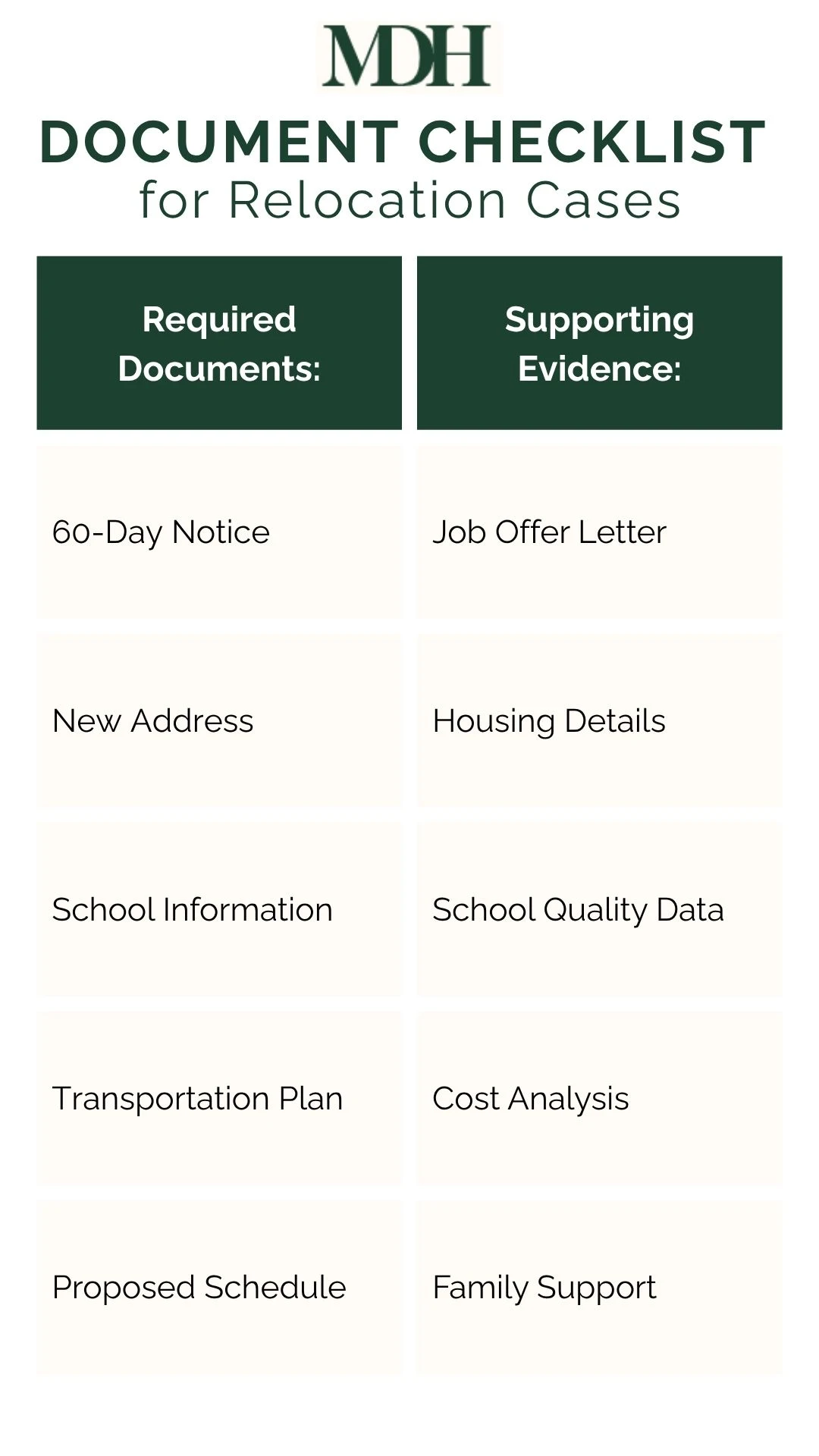
If you're the custodial parent seeking to move with your child, you must demonstrate that the proposed relocation serves the child's best interests and follow Washington's strict procedural requirements. The relocating parent bears the burden of proving the move benefits the child and won't harm their relationship with the other parent.
Required Documentation and Notice
You must provide the other parent with written notice at least 60 days before your intended move, including your new address, the child's new school district, and reasons for relocation. The notice must be sent via certified mail with return receipt requested to ensure proper service under Washington law.
Important note: Failure to provide proper notice can result in contempt of court charges and may negatively impact your relocation request.
Building Your Case for Relocation
Courts evaluate whether the proposed move serves the child's best interests by examining factors like educational opportunities, financial benefits, and family support systems. Document how the new job, educational opportunities, or family circumstances will improve your child's life and overall well-being:
- Better employment prospects and financial stability
- Enhanced educational opportunities in the new school district
- Increased family support and extended family relationships
- Improved quality of life and living conditions
These circumstances may also involve non-biological caregivers, especially in blended families, where stepparents may seek custody rights depending on the child’s best interests.
Addressing the Other Parent's Concerns
Proactively propose a new parenting plan that maintains the noncustodial parent's meaningful relationship with the child. Consider offering extended summer visits, additional holiday time, or covering transportation costs to demonstrate your commitment to preserving the parent-child relationship.
#cta_here
For Non-Custodial Parents: How to Object to a Proposed Move
As the noncustodial parent, you have 30 days from receiving notice to file an objection with the court to prevent the relocation. Time is critical — missing this deadline means the custodial parent can proceed with the move without court approval.
Filing Your Objection
You must file a formal objection with the court that issued your original custody order within 30 days of receiving the relocation notice. Your objection should clearly state your grounds for opposing the move and request a hearing to determine whether the relocation serves the child's best interests.
Critical timing: The 30-day clock starts when you receive the certified notice, not when the other parent decides to move.
Gathering Evidence Against the Move
Document how the proposed relocation would negatively impact your relationship with your child and their overall well-being. Focus on concrete factors like increased travel costs, difficulty maintaining regular visitation, and disruption to the child's current school district and community ties:
- Impact on your existing residential time and relationship
- Financial burden of long-distance visitation
- Child's attachment to current school and community
- Lack of genuine necessity for the move
Working with Legal Counsel
Given the complexity of relocation cases and tight deadlines, consulting with an attorney experienced in Washington family law is crucial. Our qualified family law attorneys can help you build a strong case, navigate court procedures, and protect your parental rights throughout the process.
What Courts Consider: The "Best Interest of the Child" Standard
Washington courts apply a comprehensive analysis to determine whether a proposed relocation serves the child's best interests under RCW 26.09.520. The judge must balance multiple factors to decide whether to approve or deny the parent's request to relocate with the child.
Understanding these factors helps parents build stronger cases and set realistic expectations for court outcomes. The judge's decision ultimately depends on which arrangement truly serves the child's best interests, not just the convenience of either parent.
Modifying Parenting Plans After Relocation
If you have a good, amicable relationship with your ex, it may work to talk things through yourselves and come up with a new parenting plan, ensuring you maintain your same visitation rights or add extended periods with the kids in order to compensate for not seeing them as often.
After a successful relocation or when parents reach a mutually beneficial arrangement, the existing custody order must be modified to reflect new circumstances:
- Extended summer and holiday visits: Longer blocks of residential time to maintain meaningful relationships.
- Virtual visitation schedules: Regular video calls, online activities, and digital communication.
- Transportation arrangements: Clear guidelines for who pays travel costs and coordinates logistics.
- School break modifications: Adjusted schedule for spring break, winter holidays, and teacher work days.
- Communication protocols: Regular phone calls, text messaging, and involvement in school activities.
The court will approve new arrangements that preserve both parents' relationships with the child while adapting to the practical realities of long-distance parenting. Focus on creating a schedule that provides stability for your child while ensuring both parents remain actively involved in their life.

Protecting Your Family's Future
As with the original parenting plan, the key thing to keep in focus is the best interests of the children when facing relocation decisions. If you find you're not happy with the proposed arrangement or feel overwhelmed by the process, consulting with a qualified attorney ensures you don't let this critical matter "just happen".
As a trusted Spokane family law firm, Hodgson Law Office provides professional legal services to help parents navigate complex relocation cases and protect their relationships with their children. Contact us today for a consultation to discuss your specific situation and legal options.
Expert Relocation Representation for Spokane Parents
Protect your parent-child relationship with proven legal strategies. Our child relocation attorneys specialize in Washington relocation cases and know what works.
FAQ